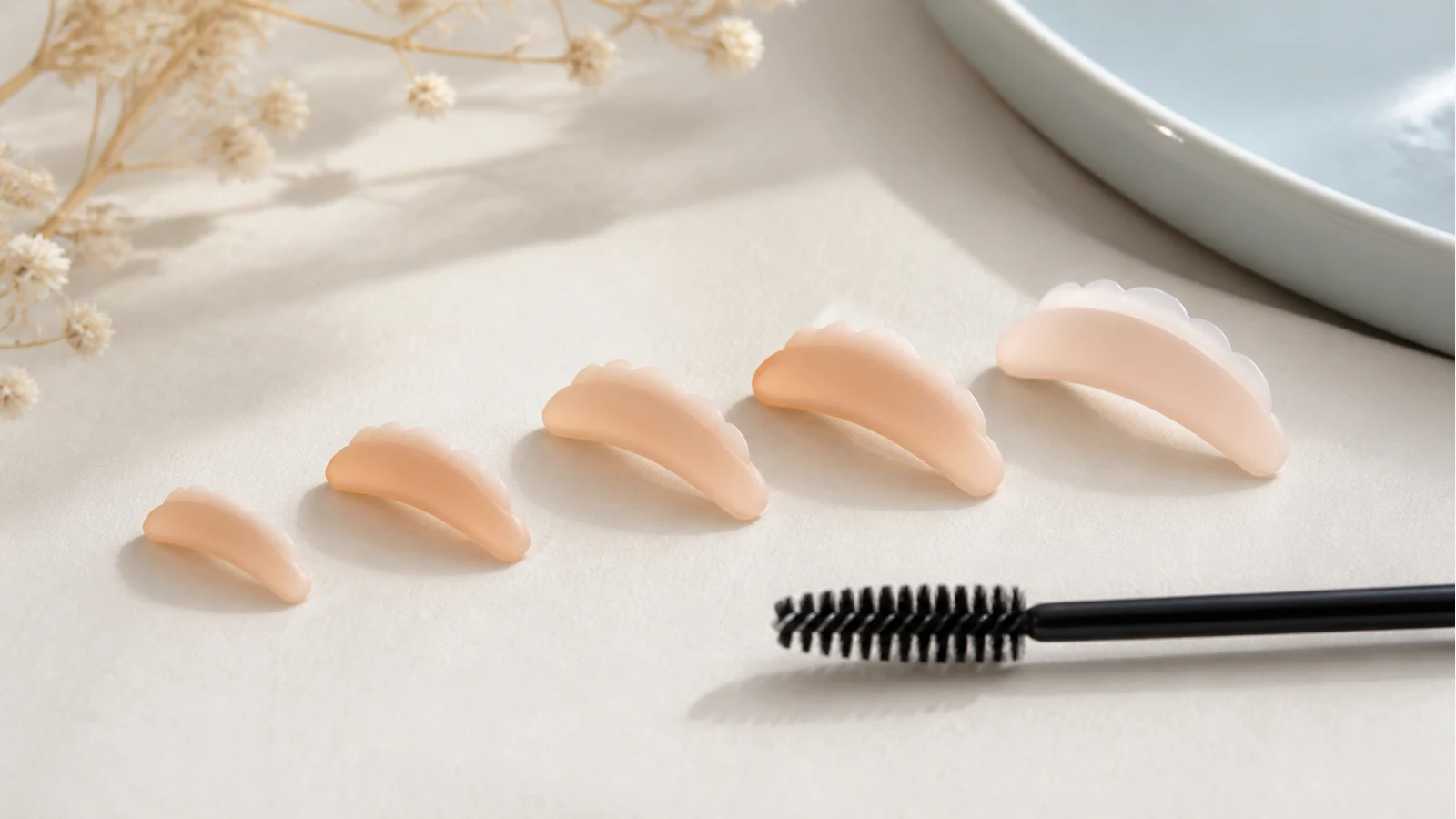
Lash Lift Shield Sizes Explained UK: How to Choose a Softer or Stronger Curl
Direct answer: lash lift shield size usually changes the strength and shape of the curl. Smaller shields tend to create a stronger, more lifted curve; larger shields tend to create a softer sweep. The best size is the one your lashes can sit on smoothly while matching the result you actually want.
There is no universal shield chart that works for every brand and every eye. Pad shape, lash length, eyelid shape and placement all matter. London Lash Studio describes small, medium and large shields as creating different levels of lift, from more dramatic to more natural. Use that as a decision principle, not a rigid rule.
Diagnostic ladder
- Look at natural lash length. Very short lashes need enough pad contact to lift without folding.
- Choose the finish. Decide between open-eyed drama and a softer natural sweep before applying product.
- Test placement dry. Lashes should lie separated and smooth on the shield.
- Read the kit instructions. Timings and placement rules belong to the product you are using.
- Stop for discomfort. Beauty technique does not outrank eye safety.
Should short lashes always use the smallest shield?
Not always. Short lashes often need a smaller shield to show lift, but the smallest option can create a tight bend if the lash length or eye shape does not suit it. The right test is whether the lash wraps cleanly and whether the final look you want is dramatic or natural. If you are unsure between two sizes, the more conservative choice is usually easier to live with than an overcurled result.
Natural vs dramatic trade-off
A dramatic result opens the eye and can help lashes that point down. The trade-off is that mistakes show more. A softer shield may look less transformed on day one, but it can be more forgiving and elegant for everyday wear. Think about your normal face, not only the mirror moment immediately after processing.
Product checks before shields touch the eye area
GOV.UK cosmetic product guidance gives a practical consumer checklist: cosmetic products should have clear product information, precautions, ingredients and responsible contact details in English. If the kit does not make those basics clear, shield size is the wrong problem to solve. Do not put an unclear product near your eyes just because the pads look usable.
Negative fit
A home shield decision is not a good fit if your eyes are irritated, if your lashes are damaged, if you cannot separate lashes patiently, or if you want a correction to a recent poor lift. It is also not a good fit if you plan to change processing time to force a result. The shield chooses the shape; it does not make unsafe timing safe.
Stop conditions
Stop if there is burning, pain, swelling, product in the eye or changes to vision. NHS eye injury guidance says chemicals in the eye and severe symptoms require medical help. NHS allergy guidance also flags swollen eyes, lips, mouth or throat and breathing or swallowing problems as urgent allergy signs. Do not try another shield while symptoms are present.
Conditional next step
If your main need is a kit with multiple pad sizes so you can choose a softer or stronger curl, and you can follow instructions without rushing, review the complete lash lifting kit. If your eye area is currently reactive or the product information is unclear, the better next step is to wait.
A dry run prevents many shield mistakes
Before any lifting product is involved, place the shield and look at how the lashes want to sit. They should not need force to reach the curve, and they should not bunch into spikes. If you cannot get the lashes smooth during a dry run, adding product will not make the decision easier.
Use the dry run to check symmetry too. One eye may need more patience than the other because natural lashes rarely grow in identical patterns. If one side always crosses at the outer corner, spend time separating before you commit to the lift. Clean placement is part of the result.
When in doubt, choose recoverable
A slightly softer curl is usually easier to accept than a tight curl that feels too dramatic every time you look down. This is especially true for first-time home users. Once you know how your lashes respond, future choices become easier. The first attempt should teach you safely, not test the most extreme result.
Common choice situations
Short but visible lashes: start by checking whether a smaller shield lets the lashes reach the curve without folding. If the tips bend sharply, move softer. Medium lashes: compare the middle sizes because they often give lift without a hard curl. Long lashes: avoid choosing small only because you want drama; long lashes can look hooked if the curve is too tight.
Downward outer corners: spend more time aligning and separating before choosing a stronger pad. Everyday makeup wearers: choose the result that still looks balanced with no mascara, because that is how you will see it most mornings. Shield choice should make daily life easier, not create a look you feel you must disguise.
If discomfort appears, do not solve it by swapping shields and continuing. Comfort and clear product instructions come before curl strength, even when the visual result feels close. Stop, reset, and seek advice.
When this check is not enough
Do not treat lash-lift guidance as medical advice, a guarantee of results, a reason to skip patch testing, or permission to use chemicals outside the manufacturer instructions.
When to stop and get help
Stop and seek professional or medical help when there is eye pain, swelling, burning, breathing difficulty, broken skin, a failed patch test, uncertain product instructions, or any chemical exposure to the eye.