Lash Lift for Straight Downward Lashes UK: A Realistic Fit Check
Direct answer: a lash lift can help straight or downward lashes when there is enough natural length to sit smoothly on a shield and when the processing instructions are followed exactly. It is not a guaranteed fix for every lash pattern, and it should not be forced by leaving lotions on longer than directed.
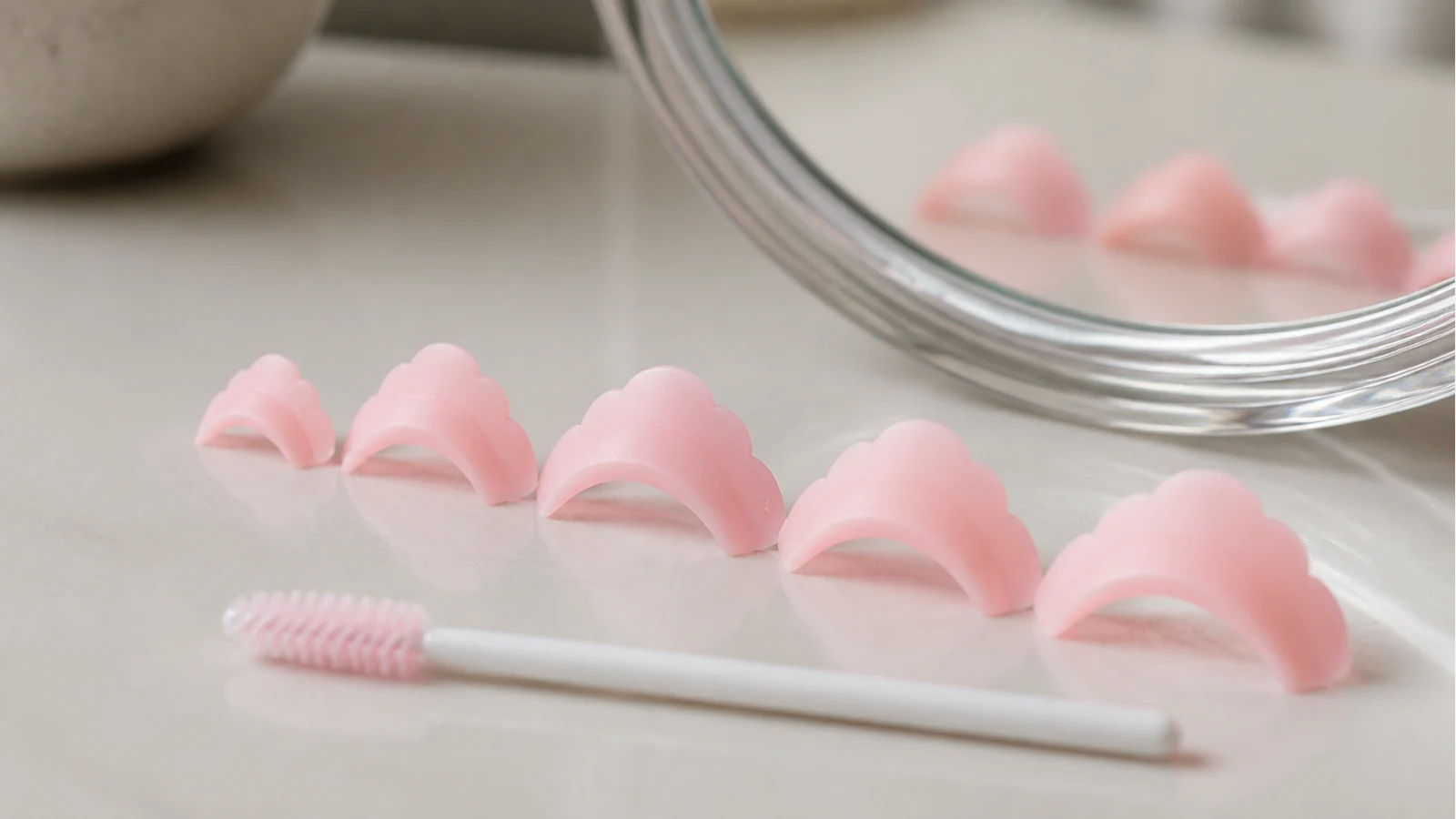
Straight lashes create a specific problem: the lash may be long enough, but it points forward or down, so mascara and curlers do not hold the shape for long. A lift tries to set that natural lash into a raised curve. London Lash Studio notes that shield sizes create different levels of lift, from more dramatic to more natural. That matters more for straight lashes than for already-curled lashes because the pad choice can decide whether the finish looks lifted or kinked.
Diagnostic ladder
- Check lash length first. If lashes are extremely short, there may not be enough length to wrap cleanly onto a shield.
- Choose the finish second. A dramatic curl can open the eye, but it can also look too tight on longer lashes.
- Respect the product timing. Straight lashes do not justify improvising longer processing time.
- Protect the first day. Keep lashes dry, cool and undisturbed after lifting.
- Stop if the eye area reacts. Irritation is a boundary, not a challenge to push through.
How shield size affects straight lashes
Smaller shields usually create a stronger-looking curve, while larger shields usually give a softer sweep. That is a general principle, not a universal chart, because brands shape pads differently. For straight downward lashes, the temptation is to choose the smallest shield for maximum correction. That can work for short lashes, but it can overcurl longer lashes or make tips point back toward the lid. A medium result that looks smooth is usually better than a maximum result that looks bent.
The same principle applies at home or in a salon: fit the shield to the lash, not to the wish. If the lash cannot lie flat and separated on the pad, the result can set unevenly. If glue placement is rushed, straight lashes may spring away from the shield before the lotion has done its job. Good preparation often matters more than a stronger formula.
Mistakes that make straight lashes look uneven
- Using a shield that is too small for long lashes.
- Letting lashes cross over each other on the pad.
- Applying product too close to the waterline.
- Changing processing time because the lashes look stubborn.
- Getting lashes wet or steamy during the first 24 hours.
Lash It Up aftercare advises keeping lashes dry in the first day and avoiding steam, sweat, eye makeup and rubbing. For straight lashes, that first day is not optional. A lift that starts well can still drop faster if the set is disturbed early.
Who should choose a different route?
A lift may not be the right route if your lashes are too short to show above the lid, if you want added thickness rather than a raised shape, or if you need a perfectly dramatic result for an event tomorrow. Extensions, a tint, or a professional consultation may fit better. If you have current eye irritation, recent injury, swelling or suspected allergy, pause the beauty decision. NHS allergy guidance explains that reactions can include red or watering eyes, itchy skin and swelling around the eyes or mouth.
Product checks before you proceed
If you are using a home product in Great Britain, GOV.UK cosmetic guidance gives a useful consumer filter: look for clear English product information, precautions, ingredients and responsible contact details. Missing information is not a bargain; it is a reason to stop.
Stop conditions
Stop if product gets into the eye, if there is burning, severe pain, vision change, swelling or worsening redness. NHS eye injury guidance says to rinse with clean water and seek medical help for chemical exposure or serious symptoms. Do not attempt to correct a poor result by immediately processing again.
Conditional next step
If your lashes are straight but long enough to wrap smoothly, and you can follow the instructions and aftercare without rushing, a kit with multiple silicone pads is relevant. The same-site complete lash lifting kit is worth checking only under those conditions. If your lashes are very short, damaged or currently irritated, wait or ask a trained lash professional first.
How to set expectations before you start
Take one clear, makeup-free look at your lashes in natural light. Notice whether they are straight but reasonably long, short and hidden by the lid, crossed at the outer corner, or fragile from previous treatments. The more complicated the starting pattern, the more valuable a professional consultation becomes.
For straight lashes, success often looks like the lash line becoming visible and the eye looking more awake, not like a false-lash effect. If you expect a lift to create thickness, you may be disappointed even if the technical lift works. Separating the curl job from the density job keeps the decision honest.
Aftercare matters more for stubborn lashes
Downward lashes already want to return to their old direction. That makes the first day especially important. Avoid anything that adds moisture, heat or pressure, and do not brush repeatedly to check whether the shape is holding. A gentle routine gives the new shape its best chance to settle cleanly and evenly.
When this check is not enough
Do not treat lash-lift guidance as medical advice, a guarantee of results, a reason to skip patch testing, or permission to use chemicals outside the manufacturer instructions.
When to stop and get help
Stop and seek professional or medical help when there is eye pain, swelling, burning, breathing difficulty, broken skin, a failed patch test, uncertain product instructions, or any chemical exposure to the eye.